Best overall boxing conditioning drill for 2026: jump rope interval rounds. Best for beginners: shadowboxing footwork ladders. Best coached option for all levels: focus mitt reaction rounds with a coach. Best no-equipment option: roadwork interval sprints. These four cover the real spread of what "conditioning" means in boxing — round-based cardio, footwork under fatigue, reaction speed, and aerobic base.
- Jump rope interval rounds build round-based cardio faster than steady-state cardio for boxing conditioning drills.
- Shadowboxing footwork ladders are the safest entry point for beginners with zero equipment cost.
- Focus mitt reaction rounds build mechanics, timing, and reactions for beginners through competitors.
- Roadwork interval sprints still build the aerobic base that supports every other round in the gym.
- Plyometric and med-ball circuits add explosive power but carry real injury risk without coaching.
Why boxing conditioning drills matter in 2026
Most fighters who plateau in 2026 aren't weak — they're conditioned wrong. Lifting heavy and running long miles builds general fitness, but boxing punishes you in 3-minute bursts with 60-second recovery windows, and a drill that doesn't respect that rhythm doesn't transfer to the ring.
Coach Chris Persaud at Better Through Boxing uses live online sessions to teach stance, footwork, defense, punch mechanics, and strategy, then gives clients conditioning drills to practice outside the technical lesson. The session is not spent watching you do cardio; the drills below support the technical work and scale from a first-timer to a competitor.
What makes the best boxing conditioning drills
- Round structure — built on 3-minute work, 60-second rest, not open-ended cardio
- Sport specificity — trains footwork, hand speed, or reaction time, not generic calorie burn
- Progressive overload — you can add rounds, combinations, or resistance as fitness improves
- Low injury risk — sustainable for daily or near-daily training without joint breakdown
- Equipment accessibility — most require a rope, a bag, or nothing at all
- Fatigue-matched skill work — the drill still demands technique when your arms are heavy, because that's when fights are actually won or lost
Boxing conditioning drills at a glance
| Drill | Best For | Standout Feature | Key Limitation |
|---|---|---|---|
| Jump Rope Interval Rounds | Overall round-based cardio | Trains rhythm and footwork simultaneously | Plateaus fast without pattern variation |
| Shadowboxing Footwork Ladders | Beginners | Zero equipment, zero injury risk | Builds no real punch resistance |
| Heavy Bag Combination Rounds | Power endurance | Combines output volume with technique | Easy to over-swing when tired |
| Focus Mitt Reaction Rounds with a Coach | Beginners through competitors | Builds mechanics and live reaction timing | Requires a skilled coach, not a partner |
| Roadwork Interval Sprints | Aerobic base, no equipment | Builds the engine everything else runs on | Doesn't train hands or footwork directly |
| Plyometric and Med-Ball Core Circuits | Explosive power | Adds pop to combinations | Highest injury risk of the six |
1. Jump Rope Interval Rounds: best boxing conditioning drill for overall cardio
Jump rope intervals put you through the same 3-minutes-on, 60-seconds-off pattern as a real round, but the rope forces your feet and hands to work together the entire time. It's the single most boxing-specific cardio tool because it trains rhythm, not just lung capacity.
Jump Rope Interval Rounds pros:
- Matches actual round timing so your body learns fight pace
- Improves footwork rhythm alongside cardio
- Cheap, portable, works anywhere
- Scales easily by adding double-unders or footwork patterns
Jump Rope Interval Rounds cons:
- Boring without pattern variation after week two or three
- Doesn't build punch-specific muscular endurance
- Hard surfaces increase joint stress over time
Best for: fighters who need a cardio base that already speaks the language of round timing.
Verdict: Buy — this earns a permanent slot in every weekly plan, beginner through competitor.
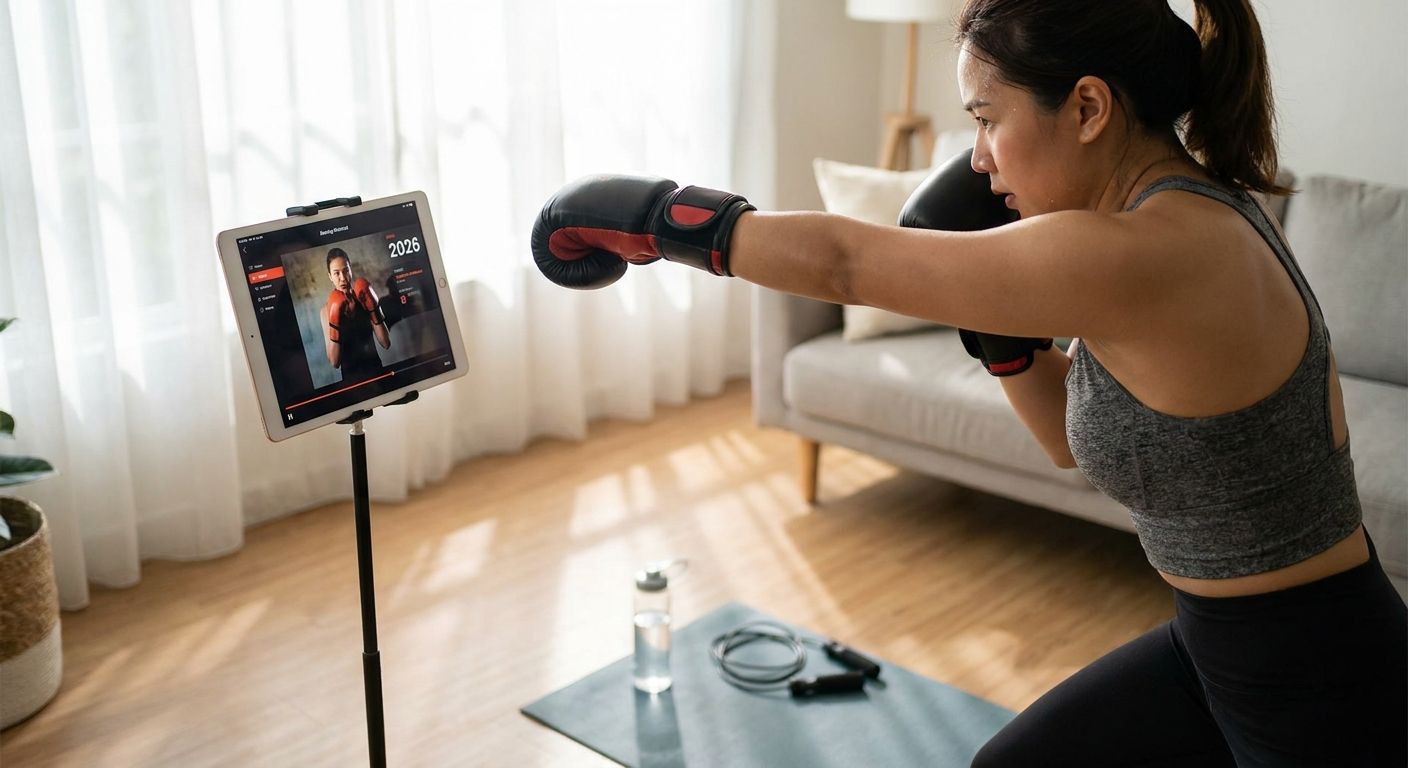
2. Shadowboxing Footwork Ladders: best boxing conditioning drill for beginners
Shadowboxing footwork ladders pair simple lateral and pivot patterns with light punch output, run in rounds, with no bag, no partner, and no risk of getting hit. It's how Better Through Boxing's online boxing classes for beginners start most new clients before they ever touch a bag.
Shadowboxing Footwork Ladders pros:
- Zero equipment and zero injury risk
- Teaches proper stance and pivot mechanics under fatigue
- Works equally well on Zoom or in a living room
- Builds body awareness before adding resistance
Shadowboxing Footwork Ladders cons:
- No resistance means limited strength carryover
- Easy to fake effort without a coach watching form
- Plateaus quickly for anyone past the beginner stage
Best for: absolute beginners in their first 6 weeks of training who need movement patterns to become automatic before adding power.
Verdict: Buy for beginners, Hold once footwork is already automatic.
3. Heavy Bag Combination Rounds: best boxing conditioning drill for power endurance
Heavy bag combination rounds string together 3-6 punch sequences for the full 3 minutes, forcing you to keep technique sharp as your shoulders fatigue. This is where conditioning and skill genuinely merge — sloppy combinations under fatigue are exactly what shows up in a real fight's championship rounds.
Heavy Bag Combination Rounds pros:
- Builds punch-specific muscular endurance
- Reinforces combination sequencing under fatigue
- Immediate, visible feedback on power output
- Scales from 2-punch combos to 6-punch sequences
Heavy Bag Combination Rounds cons:
- Fatigue often breaks down form without correction
- Requires access to a heavy bag and wraps
- Overuse leads to wrist and shoulder strain
Best for: intermediate fighters ready to load technique with volume instead of just repeating drills in the air.
Verdict: Buy once the fundamentals from footwork ladders are solid.
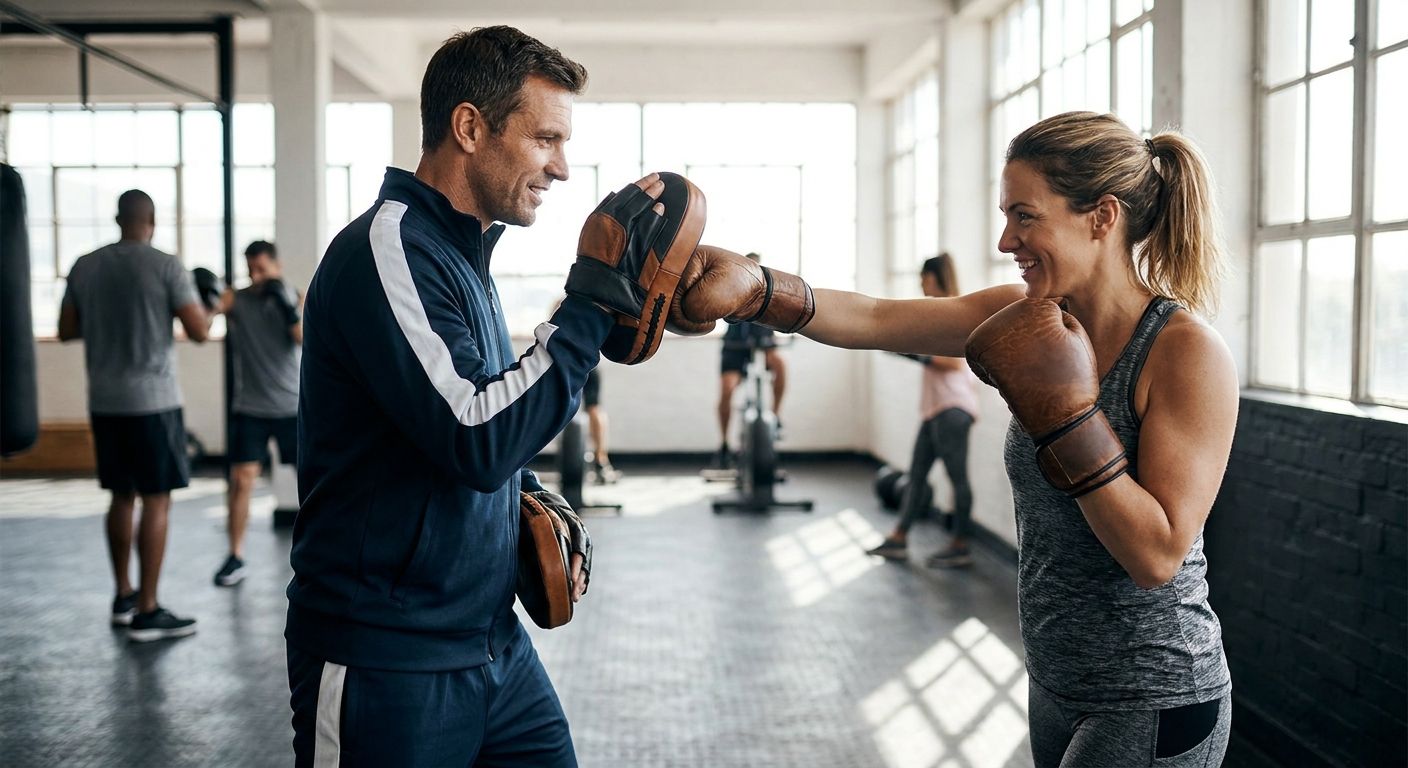
4. Focus Mitt Reaction Rounds with a Coach: best coached drill for technical development
Mitt work with a live coach benefits every level. Beginners learn stance, punch mechanics, defense, and combination structure against a responsive target; competitors use faster, less predictable rounds to sharpen reactions and timing under fatigue. Coach Persaud adjusts the drills to the fighter's experience and goals, a coaching structure detailed in Better Through Boxing's comparison of one-on-one boxing training programs.
Focus Mitt Reaction Rounds pros:
- Teaches correct mechanics and defensive responses from the beginner level onward
- Trains reaction speed and timing, not just output
- Coach adjusts pace and difficulty in real time
- Doubles as technical correction and conditioning
Focus Mitt Reaction Rounds cons:
- Requires a skilled coach holding mitts, not just a training partner
- Harder to replicate solo between sessions
- Higher cognitive demand can mask fatigue until it hits hard
Best for: beginners learning correct mechanics, intermediate fighters building combinations, and competitors sharpening timing under fatigue.
Verdict: Buy at every level; the coach changes the pace and technical demands as your skills improve.
5. Roadwork Interval Sprints: best boxing conditioning drill with no equipment
Roadwork interval sprints — short sprint bursts followed by walk or jog recovery — build the aerobic base every other drill on this list depends on. It's the oldest conditioning method in boxing for a reason: it's free, and it works.
Roadwork Interval Sprints pros:
- No equipment, no cost, works anywhere with pavement
- Builds the aerobic engine that supports round recovery
- Low technical skill barrier
- Easy to track progress by distance or time
Roadwork Interval Sprints cons:
- Doesn't train hands, footwork, or defense
- High-impact on joints if overdone
- Easy to under-load intensity without structure
Best for: fighters building a base fitness floor before layering in boxing-specific rounds, or maintaining conditioning between camps.
Verdict: Buy as a supplement, Skip as your only conditioning method — it doesn't teach you anything about boxing.
6. Plyometric and Med-Ball Core Circuits: best boxing conditioning drill for explosive power
Plyometric jumps and med-ball rotational throws build the fast-twitch power behind a real punch, which steady cardio and roadwork can't touch. This drill adds pop to combinations already grooved through mitt work and bag rounds.
Plyometric and Med-Ball Core Circuits pros:
- Builds explosive power that shows up in punch output
- Strengthens rotational core strength used in every punch
- Short sessions produce real results
Plyometric and Med-Ball Core Circuits cons:
- Highest injury risk of the six without coached progression
- Not suited to true beginners or anyone with joint issues
- Requires recovery time between sessions, can't run daily
Best for: advanced fighters with a solid technical base looking to add power, not beginners.
Verdict: Wait until footwork and bag work are solid, then Buy with supervision.
How these boxing conditioning drills were ranked
Each drill was weighed against the six criteria above: round structure, sport specificity, progressive overload, injury risk, equipment accessibility, and whether it holds up technically under fatigue. Drills that only burned calories without teaching boxing mechanics dropped down the list; drills that trained the sport itself, even at the cost of convenience, ranked higher.
Get live technical boxing coaching
Learn stance, footwork, defense, punch mechanics, and strategy through live instruction and assigned drills, not watched cardio.
Which boxing conditioning drill should you choose?
If you're new to the sport in 2026, start with shadowboxing footwork ladders and coached mitt work to build sound mechanics, then add jump rope intervals as your footwork improves. If you're already training, heavy bag rounds and roadwork sprints build endurance, while mitt work keeps technique sharp as the pace rises. Competitors need the same coached work with faster reactions and fight-specific combinations. Jump rope interval rounds remain the best solo conditioning default, while coached mitt work is the best technical choice for every level.
FAQ
What are the best boxing conditioning drills for beginners in 2026?
Shadowboxing footwork ladders are the best starting drill because they require no equipment and carry no injury risk while teaching stance and pivot mechanics. Add jump rope intervals once footwork feels automatic, usually within 6 weeks.
How long should a boxing conditioning round last?
Standard boxing rounds run 3 minutes of work followed by 60 seconds of rest, and conditioning drills should follow the same structure. Matching this rhythm trains your body for actual fight pace, not generic cardio.
Is roadwork still relevant for boxing conditioning in 2026?
Yes — roadwork interval sprints still build the aerobic base that supports recovery between rounds. It doesn't replace boxing-specific drills like mitt work or bag combinations, but it supplements them well.
Are focus mitts better than a heavy bag for conditioning?
Focus mitt work with a skilled coach benefits beginners through competitors because it develops mechanics, timing, defense, and reactions. A heavy bag remains useful for solo power-endurance training between coached sessions.
How often should you do boxing conditioning drills?
Round-based drills like jump rope and shadowboxing can run near-daily with low injury risk. Higher-impact drills like plyometrics and sprint work need at least one rest day between sessions to recover properly.
Can you build boxing conditioning without a coach?
Shadowboxing, jump rope, and roadwork can build conditioning without a coach. Better Through Boxing's online sessions focus on technical instruction, real-time correction, and assigned drills rather than watching you do cardio; physical mitt work requires in-person coaching.
What's the biggest mistake in boxing conditioning?
Training conditioning as generic cardio instead of round-based, sport-specific work is the most common mistake. A drill that ignores the 3-minute round and 60-second rest structure doesn't transfer to how a fight actually feels.
One last thing
The drill fighters skip most often in 2026 is the one that matters most under pressure: reaction-based mitt work. Cardio gets you through 12 rounds; timing decides who wins them.