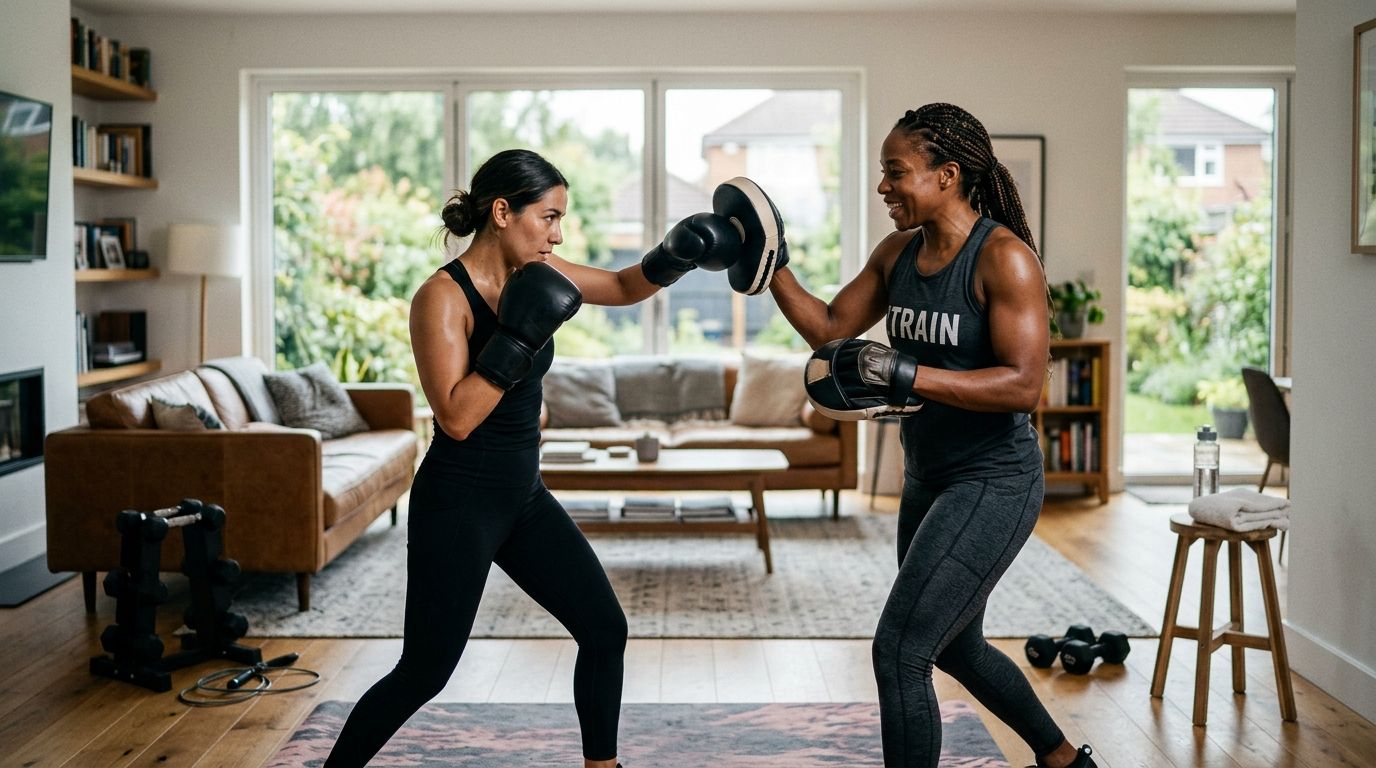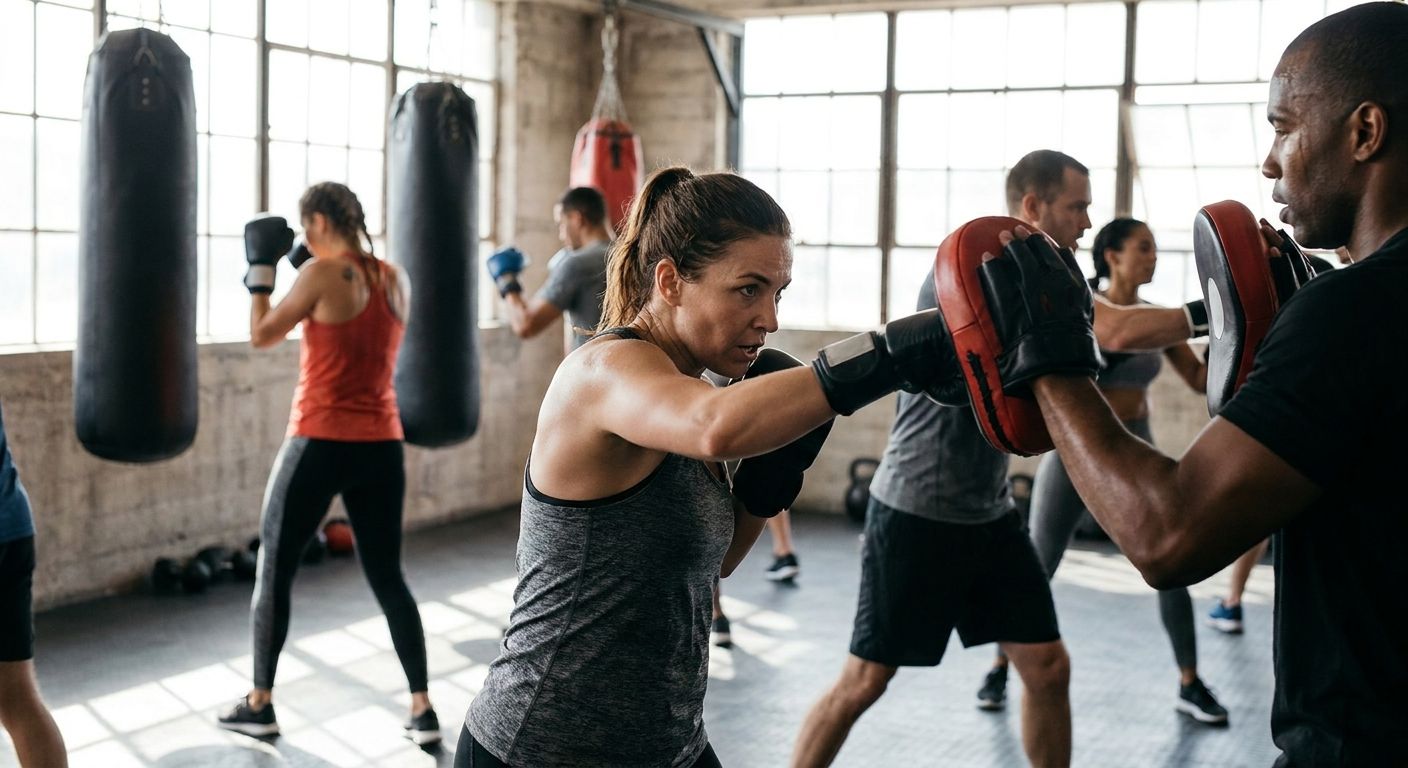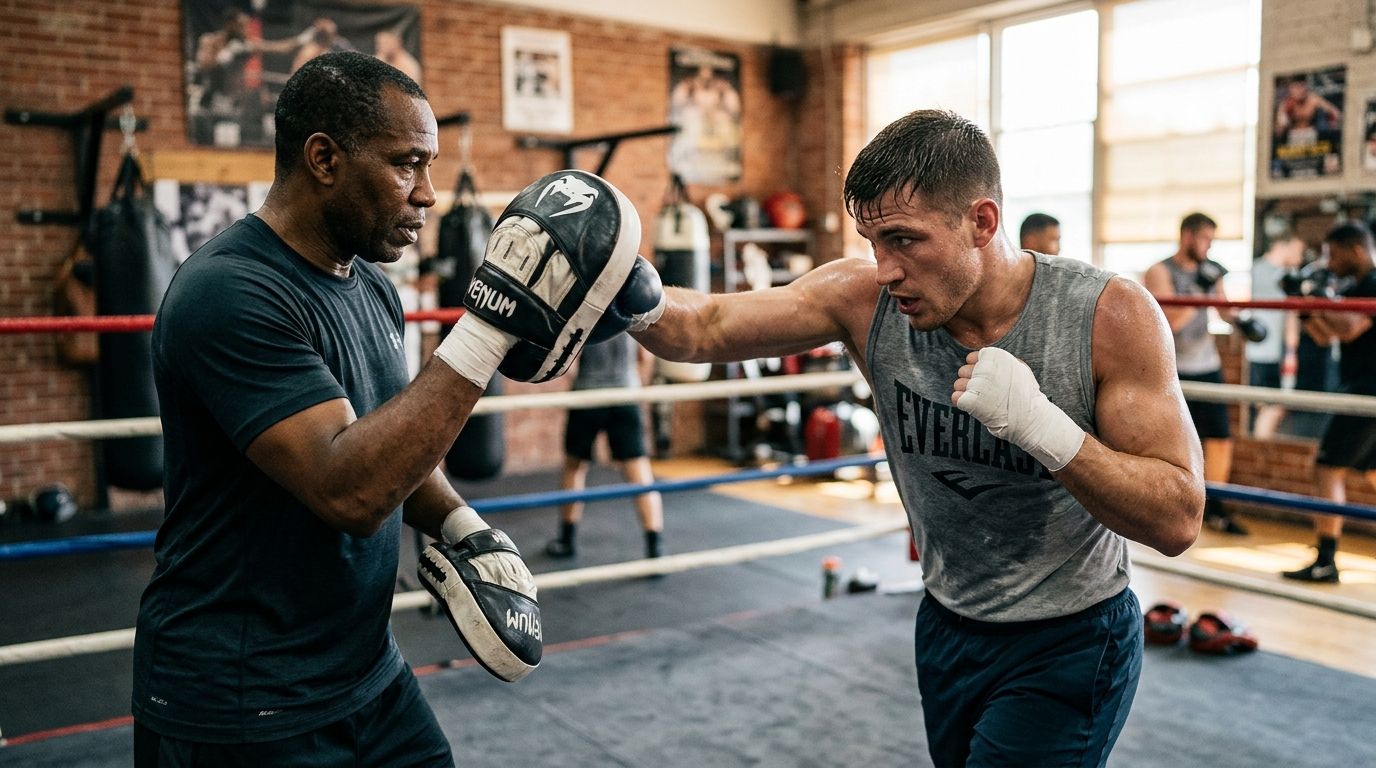
Six mitt work drills separate coaches who build real boxers from coaches who just hold pads. The Core 4 Combo Feed wins for beginners, Reaction Call Mitts win for reflex development, and Freestyle Live Mitts win for competitors sharpening fight IQ — the drill you pick depends entirely on what skill gap you're closing this session.
- Core 4 Combo Feed is the best boxing mitt work drill for beginners still learning stance and footwork.
- Reaction Call Mitts build reflexes faster than fixed combo drilling once a boxer has clean mechanics.
- Slip-and-Rip Counter Mitts teach defense-to-offense transitions that fixed patterns never touch.
- Fatigue-Round Mitts expose form breakdown under load — the single best predictor of late-round losses.
- Freestyle Live Mitts are the closest thing to sparring a mitt drill can offer competitors in 2026.
Why this matters
Most coaches default to the same combo feed every round because it's easy to call and easy to follow. That's fine for a first Zoom session — it's a problem by week four, when a boxer still can't react to anything unscripted.
Mitt work exists to bridge shadow boxing and sparring. Pick the wrong drill for the skill level in front of you and you either bore an intermediate boxer with baby combos or throw a beginner into chaos before their stance holds up. Better Through Boxing structures private sessions around this exact progression, moving a boxer from scripted feeds to live reaction work as mechanics solidify — the same logic applies whether you coach in a driveway or over Better Through Boxing's live Zoom format.
What makes the best boxing mitt work drills
- Transferability to sparring — does the drill teach a reaction a boxer will actually use against a moving opponent, or just a memorized sequence
- Skill-level fit — does it match where the boxer is right now, not where you wish they were
- Coach feedback density — how much real-time correction can you deliver per minute of the drill
- Injury and form risk — does fatigue or speed in the drill start breaking technique before the round ends
- Progression logic — does it build toward the next drill, or is it a dead end
- Engagement over rounds — does the boxer stay sharp for three-minute rounds or check out by round two
Boxing mitt work drills at a glance
| Drill | Best for | Standout feature | Key limitation |
|---|---|---|---|
| Core 4 Combo Feed | Beginners building fundamentals | Fixed jab-cross-hook-uppercut sequencing locks in mechanics | Predictable pattern doesn't train reaction |
| Reaction Call Mitts | Sharpening reflexes | Random mitt calls force real-time decision making | Requires clean base mechanics first |
| Slip-and-Rip Counter Mitts | Counterpunching development | Pairs defensive movement with immediate offense | Easy to rush and lose head position |
| Pivot-and-Angle Mitts | Footwork and ring generalship | Trains lateral movement most drills ignore | Needs floor space most home setups lack |
| Fatigue-Round Mitts | Late-fight conditioning | Exposes form breakdown under load | Not appropriate for total beginners |
| Freestyle Live Mitts | Competitors sharpening fight IQ | Closest simulation to live sparring | Demands an experienced holder |
1. Core 4 Combo Feed: best boxing mitt work drill for beginners building fundamentals
The Core 4 Combo Feed cycles the jab, cross, hook, and uppercut in fixed sequences while the coach calls stance corrections between reps. It's the drill every new boxer should run for the first several sessions before anything gets randomized.
Core 4 Combo Feed pros:
- Locks in proper punch mechanics before speed gets added
- Lets a coach correct stance and hand position mid-drill without breaking flow
- Works identically over Zoom or in person, which matters for home boxing equipment for beginners setups with limited space
Core 4 Combo Feed cons:
- Doesn't train reaction — a boxer can memorize the pattern without reading the mitt
- Gets stale fast if run past week three or four without variation
Best for: absolute beginners in their first month of coaching. Verdict: core rotation drill, non-negotiable at the start.
2. Reaction Call Mitts: best mitt work drill for sharpening reflexes
Instead of a set sequence, the coach calls punches at random — jab, then double jab, then a surprise hook — forcing the boxer to process and respond instead of predict. This is where mitt work stops being memorization and starts being boxing.
Reaction Call Mitts pros:
- Trains the actual skill sparring demands: reacting to something unexpected
- Scales difficulty instantly just by calling faster or mixing combos
- Reveals which punches a boxer flinches on or misfires under pressure
Reaction Call Mitts cons:
- Falls apart if mechanics from the Core 4 stage aren't solid yet
- Requires a coach who can call combos fast enough to actually challenge the boxer
Best for: boxers past their first 4-6 weeks with clean fundamentals. Verdict: add once stance and punch mechanics stop breaking down.
3. Slip-and-Rip Counter Mitts: best mitt work drill for developing counterpunching
The coach throws a mitt-simulated jab or hook, the boxer slips or rolls under it, then immediately fires a counter combo. This drill teaches the single hardest thing to coach verbally: what to do the instant after you avoid a punch.
Slip-and-Rip Counter Mitts pros:
- Trains defense and offense as one continuous motion, not two separate skills
- Builds head movement habits that stick under pressure
- Directly transfers to sparring in a way combo drilling never does
Slip-and-Rip Counter Mitts cons:
- Easy to rush, which causes boxers to drop their head instead of slipping properly
- Coaches need real timing to throw the simulated punch believably
Best for: intermediate boxers ready to connect defense to offense. Verdict: add mid-program, watch head position closely for the first several rounds.
4. Pivot-and-Angle Mitts: best mitt work drill for footwork and ring generalship
The boxer throws a combo, then pivots off the centerline to a new angle before the coach resets. Most mitt drills train hands. This one trains feet, which is the difference between a boxer who fights in straight lines and one who cuts off the ring.
Pivot-and-Angle Mitts pros:
- Fixes the single most common beginner flaw: squaring up and standing flat-footed
- Builds the pivot mechanics that show up in every real fight, amateur or pro
- Works well in the small-group or 1-on-1 format most private coaching uses
Pivot-and-Angle Mitts cons:
- Needs more floor space than a garage or small home gym often has
- Slower-paced, so it's a poor fit for a boxer who needs conditioning work that round
Best for: boxers with clean punches who still fight flat-footed. Verdict: add as soon as footwork becomes the visible weak point.
5. Fatigue-Round Mitts: best mitt work drill for late-fight conditioning
Run this drill in the final round of a session, after the boxer is already tired, and watch which techniques collapse first. Hands drop, guard opens, punches get lazy — and that's exactly the information a coach needs before a fight or sparring session.
Fatigue-Round Mitts pros:
- Shows form breakdown under load that a fresh-round drill will never reveal
- Doubles as conditioning work, cutting total session time
- Gives a coach a clear, specific correction list for the next session
Fatigue-Round Mitts cons:
- Wrong drill for total beginners still learning basic mechanics
- Can reinforce bad habits if the coach doesn't correct form in real time
Best for: boxers preparing for sparring or competition. Verdict: run it in the last three-minute round only, once fundamentals hold.
6. Freestyle Live Mitts: best mitt work drill for competitors sharpening fight IQ
No script, no fixed pattern — the coach reacts to what the boxer does and vice versa, simulating a live exchange as closely as a mitt drill can get. This is the top of the mitt-work ladder, and it's wasted on anyone who isn't already comfortable with reaction drills and counterpunching.
Freestyle Live Mitts pros:
- Closest a mitt drill gets to real sparring without contact risk
- Sharpens decision-making speed under real time pressure
- Highly customizable to a specific opponent's tendencies before a fight
Freestyle Live Mitts cons:
- Demands an experienced holder who can improvise convincingly
- Offers little value to beginners who haven't built a reaction base yet
Best for: competitors and advanced boxers in fight camp. Verdict: reserve for advanced boxers, skip entirely for beginners.
How we ranked
Each drill was weighed against the six criteria above, with transferability to sparring and skill-level fit carrying the most weight. A drill that looks impressive but doesn't match where a boxer actually is — running Freestyle Live Mitts with a week-two beginner, for example — fails the ranking regardless of how advanced it looks on video.
Get a coach-built mitt work progression
Private 1-on-1 sessions with Coach Chris Persaud, in person or live over Zoom.
Which boxing mitt work drill should you run?
Start every new boxer on the Core 4 Combo Feed for the first month, add Reaction Call Mitts once punches stop breaking down, then layer in Slip-and-Rip Counter Mitts and Pivot-and-Angle Mitts as defense and footwork become the limiting factor. Save Fatigue-Round Mitts and Freestyle Live Mitts for boxers heading toward sparring or competition in 2026 — running them earlier just teaches bad habits under pressure.
FAQ
What are the best boxing mitt work drills for beginners?
The Core 4 Combo Feed is the best boxing mitt work drill for beginners in 2026 because it locks in jab-cross-hook-uppercut mechanics before any reaction work gets added. Coaches should run it for the first several weeks before introducing random calls.
How often should mitt work happen in a training week?
Most private coaching structures include mitt work in every session rather than as a separate day, since it pairs directly with whatever technique or conditioning focus that session has. A typical round runs three minutes, matching standard boxing round length.
Is reaction mitt work better than combo mitt work?
Neither is better in isolation — combo mitt work builds the mechanics reaction mitt work then tests. Skipping straight to reaction calls before mechanics are clean usually causes sloppy punches under pressure.
Can mitt work drills be done virtually over Zoom?
Yes, mitt work drills including the Core 4 Combo Feed and Reaction Call Mitts translate well to live virtual coaching since the coach can call combos and correct form in real time over video.
What mitt drill helps the most with counterpunching?
Slip-and-Rip Counter Mitts directly train the transition from defensive movement to an immediate counter, which is the specific skill most boxers struggle to apply once sparring starts.
How do coaches know when a boxer is ready for advanced mitt drills?
A boxer is ready for Reaction Call Mitts or Slip-and-Rip Counter Mitts once their Core 4 punches hold correct form at speed without conscious thought. Rushing advanced drills before that point reinforces bad mechanics.
One last thing
The drill order matters more than the drill list. Coaches who run Freestyle Live Mitts with a beginner aren't being advanced — they're skipping the mechanics work that makes freestyle mitts useful in the first place, and it shows up as sloppy technique the moment sparring starts in 2026.