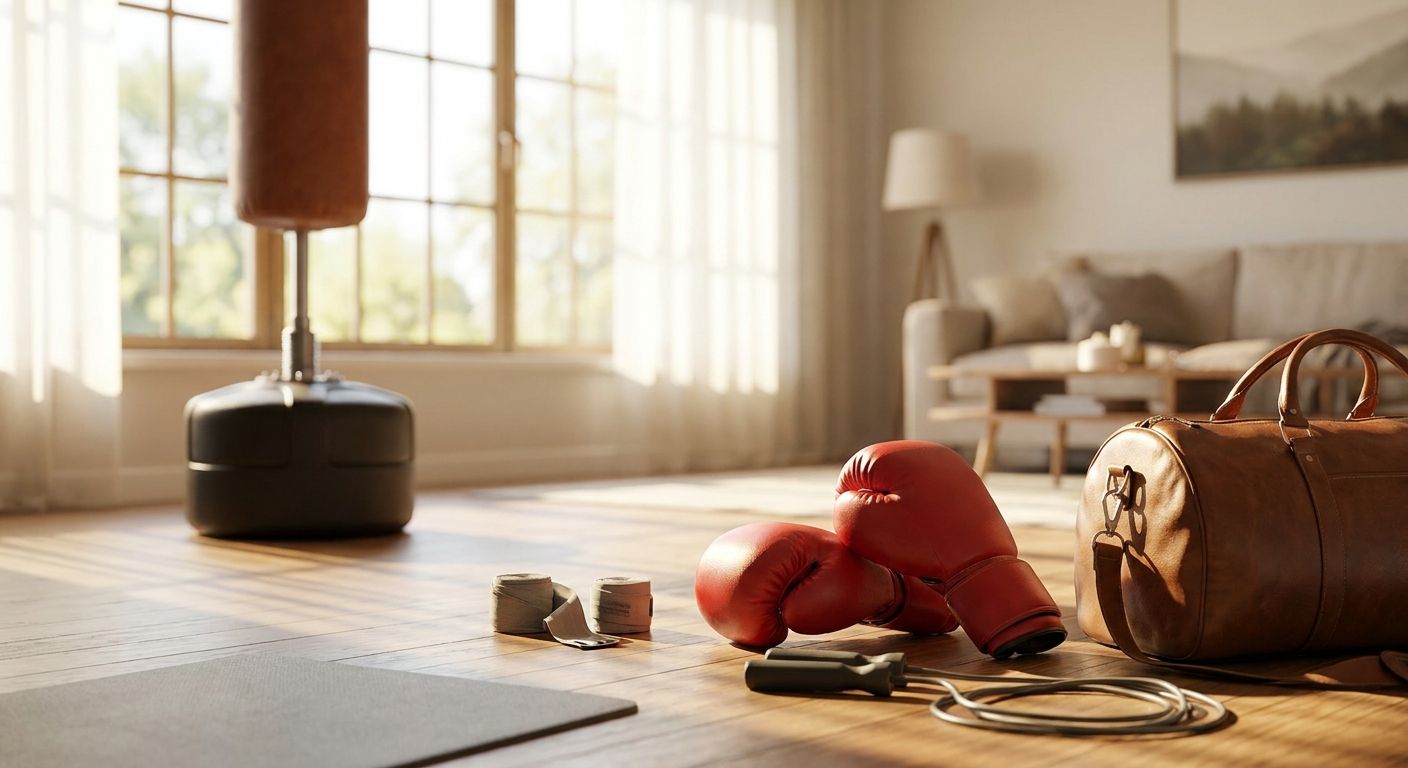
Six pieces of gear cover the entire beginner curve in 2026: hand wraps, bag gloves, a jump rope, a heavy bag, focus mitts, and a mouthguard. Buy in that order and skip everything else until a coach tells you otherwise.
- Best home boxing equipment for beginners in 2026 starts with hand wraps, 14-16 oz bag gloves, and a jump rope.
- A freestanding heavy bag beats a hanging bag when there's no ceiling joist to mount to.
- Focus mitts only earn their spot once a partner or coach is calling combinations back to you.
- A mouthguard becomes non-negotiable the moment mitt work with a real coach or any sparring enters the picture.
Why this matters
Gear does not teach you how to keep your chin tucked or your feet under you. Real boxing mechanics — stance, footwork, slipping, the Core 4 punches — come from repetition with feedback, which is exactly what Better Through Boxing builds sessions around, whether you're training in a garage or over Zoom.
Still, showing up with the wrong equipment slows that progress down. Gloves that are too light break down your wrists on a heavy bag. Wraps that are too short leave your knuckles exposed. A hanging bag in an apartment with no ceiling joist is a project you'll abandon by week two. Get the six essentials right in 2026 and every coached session or home rep builds on solid mechanics instead of fighting the gear.
What makes the best home boxing equipment for beginners
- Fits the space you actually train in — garage, apartment, backyard, or a cleared-out living room
- Correct sizing for your hands and skill level — wrap length, glove ounce weight, bag weight
- Durable enough for daily contact — stitching, wrist support, bag shell material
- Builds real technique, not just a sweat — supports stance, footwork, and combinations rather than random flailing
- Works alongside coached sessions instead of against them — compatible with mitt work and Zoom lessons
- Doesn't require a full home gym budget — six items, not sixteen
Home boxing equipment for beginners at a glance
| Item | Best for | Standout feature | Key limitation |
|---|---|---|---|
| Hand wraps | Injury prevention on day one | Wrist and knuckle support before any impact | Needs re-wrapping technique to work correctly |
| Bag gloves | Heavy bag training at home | 14-16 oz padding absorbs repeated impact | Not built for sparring without added protection |
| Jump rope | Footwork and conditioning | Trains the same rhythm used in 3-minute rounds | Takes weeks to build clean coordination |
| Freestanding heavy bag | Apartments and garages with no ceiling mount | Water or sand base needs no drilling | Bulkier footprint than a hanging bag |
| Focus mitts | Partner or coached combination work | Real-time feedback on timing and power | Useless without a partner calling numbers |
| Mouthguard | Sparring-ready beginners | Boil-and-bite fit for a few dollars | Only matters once contact enters the plan |
1. Hand wraps: best home boxing equipment for injury prevention
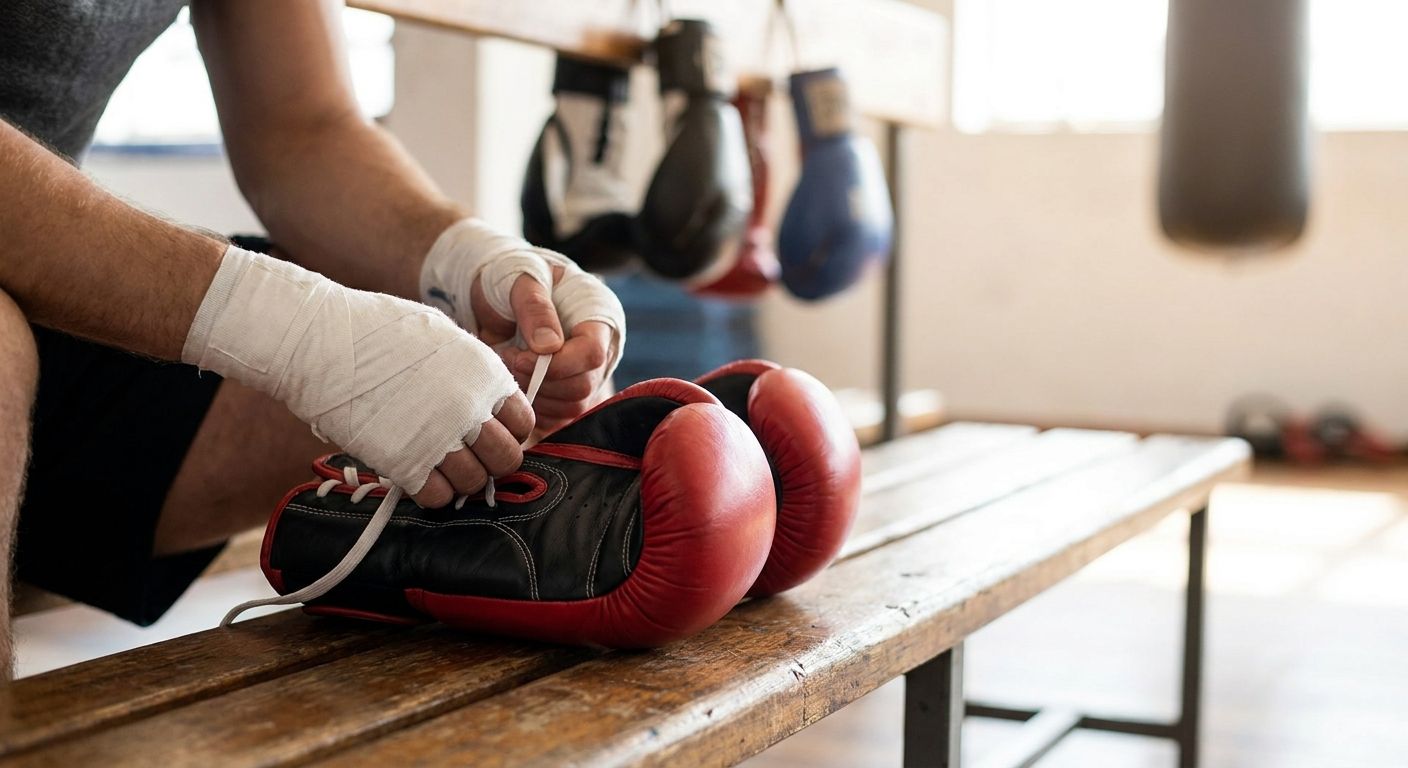
Hand wraps go on before anything else touches your fists, and they're the cheapest item on this list by a wide margin. A 180-inch wrap covers the wrist and knuckles fully; a 120-inch wrap works for smaller hands but leaves less margin for error.
Hand wraps pros:
- Prevent wrist rolls and knuckle bruising on a heavy bag
- Cheap enough to own two or three pairs
- Machine washable, dry fast between sessions
Hand wraps cons:
- Wrapping technique has a learning curve — a loose wrap does nothing
- Cotton wraps stretch out and need replacing every few months of regular use
Best for: every beginner, before the first punch is thrown. Verdict: Buy.
2. Bag gloves: best home boxing equipment for heavy bag training
Bag gloves in the 14-16 oz range are the standard for beginners hitting a heavy bag at home in 2026 — enough padding to protect your hands without slowing your hands down so much that form breaks apart. Lighter 10-12 oz gloves suit speed work on a double-end bag but wear out fast on heavier bags.
Bag gloves pros:
- 14-16 oz padding handles daily heavy bag sessions without hand pain
- Velcro closures are faster to get on solo than lace-up gloves
- Widely available in half sizes for a proper fit
Bag gloves cons:
- Not rated for sparring — that requires dedicated sparring gloves and headgear
- Interior padding compresses over months of regular use and needs monitoring
Best for: anyone training solo on a heavy bag at home. Verdict: Buy.
3. Jump rope: best home boxing equipment for footwork and conditioning
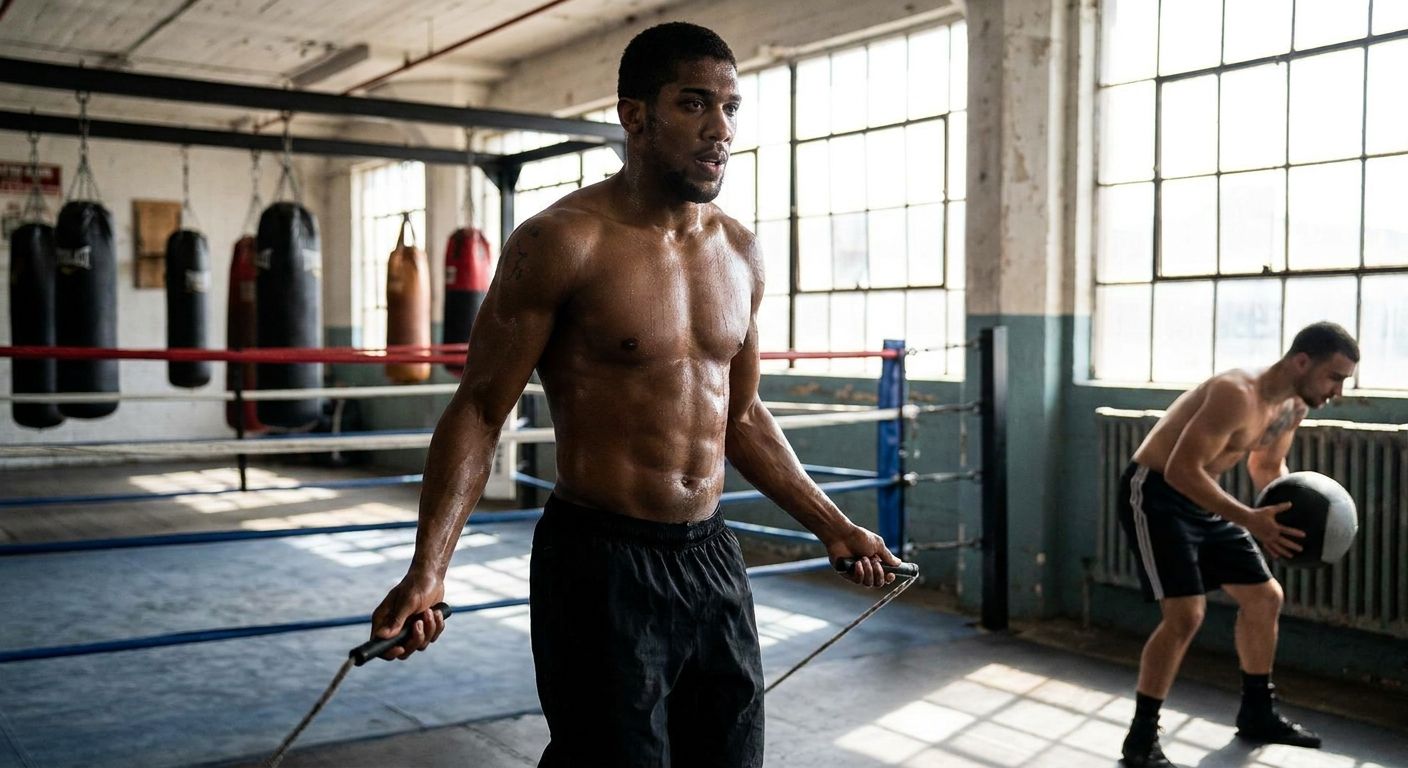
A jump rope trains the exact rhythm a boxing round demands — most gyms and coaches still time rounds at 3 minutes with a 1-minute rest, and rope work is how fighters condition for that clock. It also costs less than any other item here and packs into a bag.
Jump rope pros:
- Builds the same footwork rhythm used in 3-minute rounds
- Zero learning curve to own, short learning curve to use well
- Doubles as a warm-up and a conditioning finisher
Jump rope cons:
- Ceiling height under roughly 8 feet makes double-unders impractical
- Coordination takes real weeks to build for total beginners
Best for: beginners building conditioning between coached sessions. Verdict: Buy.
4. Freestanding heavy bag: best home boxing equipment for apartments and garages
A freestanding bag on a water- or sand-filled base solves the problem a hanging bag can't: no ceiling joist, no drilling, no landlord conversation. It takes up more floor space than a hanging bag but sets up in an afternoon.
Freestanding heavy bag pros:
- No ceiling mounting or stud-finding required
- Portable enough to move between garage and backyard
- Base can be adjusted lighter or heavier for stability
Freestanding heavy bag cons:
- Wobbles more than a hanging bag on hard combinations if underfilled
- Larger footprint than a wall- or ceiling-mounted bag
Best for: renters and anyone without a garage joist to hang from. Verdict: Buy if space allows; Hold if floor space is genuinely tight.
5. Focus mitts: best home boxing equipment for partner and coached rounds
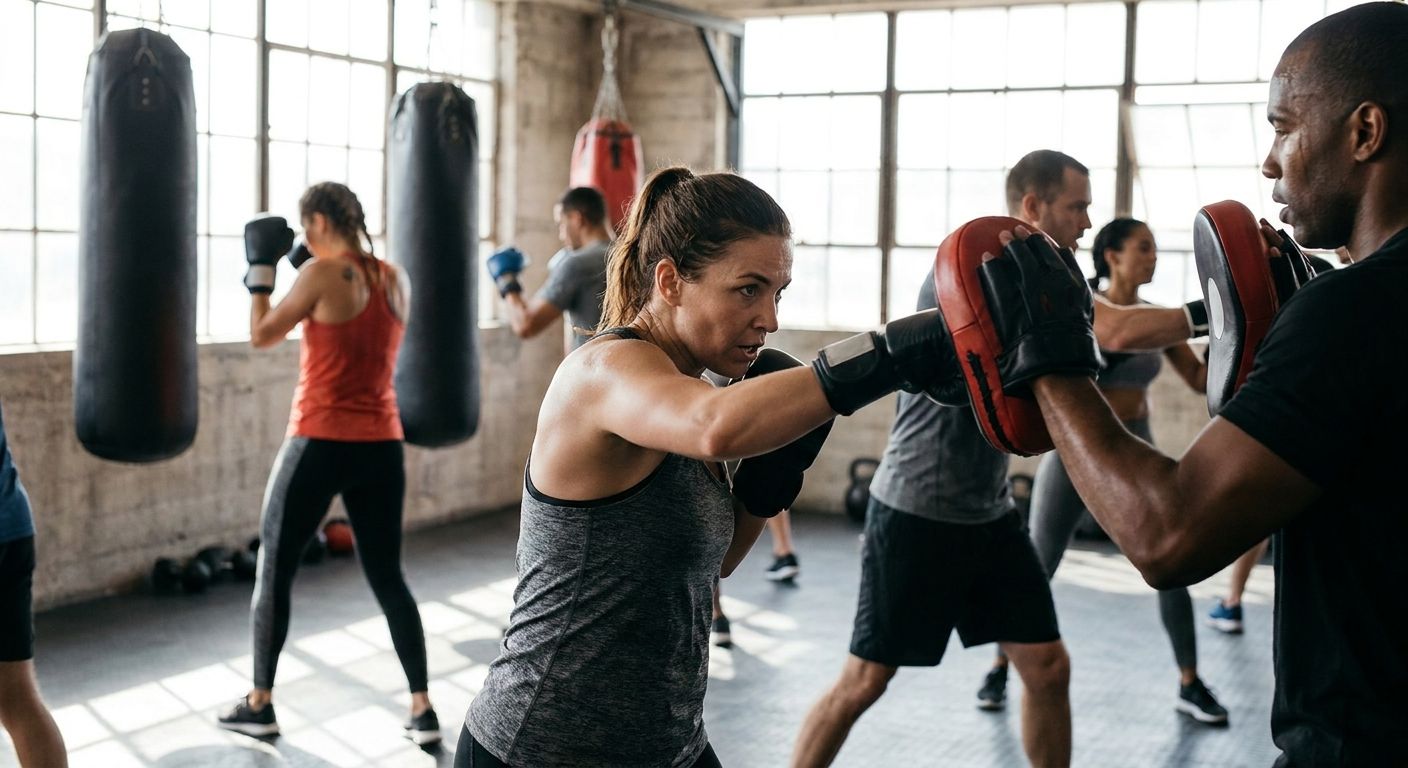
Focus mitts are the one item on this list that does nothing alone. They exist to give a coach or training partner a target to call combinations to, which is where real timing and power development happens — the kind of feedback loop live online boxing coaching is built around even over a Zoom call, with a partner holding pads on the other end.
Focus mitts pros:
- Sharpens timing, distance, and combination accuracy fast
- Lightweight and cheap relative to a heavy bag
- Works for holder and puncher, so two beginners can trade off
Focus mitts cons:
- Completely useless without a second person
- A holder with no experience can teach bad habits just as easily as good ones
Best for: beginners with a training partner or a coach calling rounds. Verdict: Hold until a partner or coached session is lined up.
6. Mouthguard: best home boxing equipment for sparring-ready beginners
A boil-and-bite mouthguard is the last item to buy, not the first — it only matters once mitt work intensifies or actual sparring enters the picture. Beginners hitting a bag solo at home don't need one on day one.
Mouthguard pros:
- Cheap insurance the moment contact work starts
- Boil-and-bite versions fit in minutes with no dentist visit
- Small enough to keep in a gym bag permanently
Mouthguard cons:
- Does nothing for pure solo bag or rope training
- Boil-and-bite fit is looser than a custom-molded guard
Best for: beginners moving toward coached mitt work or sparring. Verdict: Buy once contact training starts; Skip for solo bag work only.
How this list was ranked
Each item earned its slot by solving one distinct problem — injury prevention, bag training, conditioning, space constraints, coached feedback, or contact readiness — instead of competing for the same generic "best gear" label. Items that only work with a second person, like focus mitts, get an honest Hold instead of a blanket recommendation, because the equipment alone doesn't replace what a coach or partner actually adds.
Turn gear into real technique
Live 1-on-1 boxing coaching with Coach Chris Persaud, in person or over Zoom.
Which home boxing equipment should you buy first in 2026?
For a total beginner training solo at home in 2026, hand wraps, 14-16 oz bag gloves, and a jump rope come first — under three items, all usable within the first week. Add a freestanding heavy bag once you've confirmed you'll actually use it three or more times a week. Hold off on focus mitts and a mouthguard until a partner or a coach is part of the routine; equipment without instruction plateaus fast, and checking what private boxing lessons cost in 2026 is a reasonable next step before that plateau hits.
FAQ
What is the best home boxing equipment for beginners in 2026?
Hand wraps, 14-16 oz bag gloves, and a jump rope cover the first weeks of home boxing training in 2026. A freestanding heavy bag and, later, focus mitts and a mouthguard round out the full setup.
Do beginners need a heavy bag to start boxing at home?
No — hand wraps, gloves, and a jump rope let a beginner build fundamentals before a heavy bag enters the picture. A freestanding bag makes sense once footwork and punching mechanics are solid enough to hit something consistently.
What glove weight is best for a beginner hitting a heavy bag?
14-16 oz bag gloves are the standard weight for beginners training on a heavy bag at home. Lighter 10-12 oz gloves suit speed work but break down faster under repeated heavy bag impact.
Are focus mitts worth buying for home training?
Focus mitts only pay off with a training partner or coach holding them, since they exist to give someone else a target to call combinations to. Buying a pair for solo training with nobody to hold them is a wasted purchase.
Is a freestanding heavy bag better than a hanging bag for apartments?
Yes, for anyone without access to a ceiling joist — a freestanding bag on a water- or sand-filled base sets up without drilling. It does take up more floor space than a mounted hanging bag.
When does a beginner need a mouthguard for boxing?
A mouthguard becomes necessary once mitt work intensifies or sparring enters the training plan, not during solo bag or rope work. Boil-and-bite versions fit in minutes and cost little.
Can home equipment replace a boxing coach?
No — equipment supports repetition but doesn't correct stance, footwork, or punch mechanics the way live feedback does. Pairing home gear with coached sessions, in person or via Zoom, builds technique faster than gear alone.
One last thing
The most skipped item on this list isn't the heavy bag — it's the hand wraps, and it's the one beginners regret skipping first, usually within the first month of daily bag work in 2026 when wrist soreness shows up.