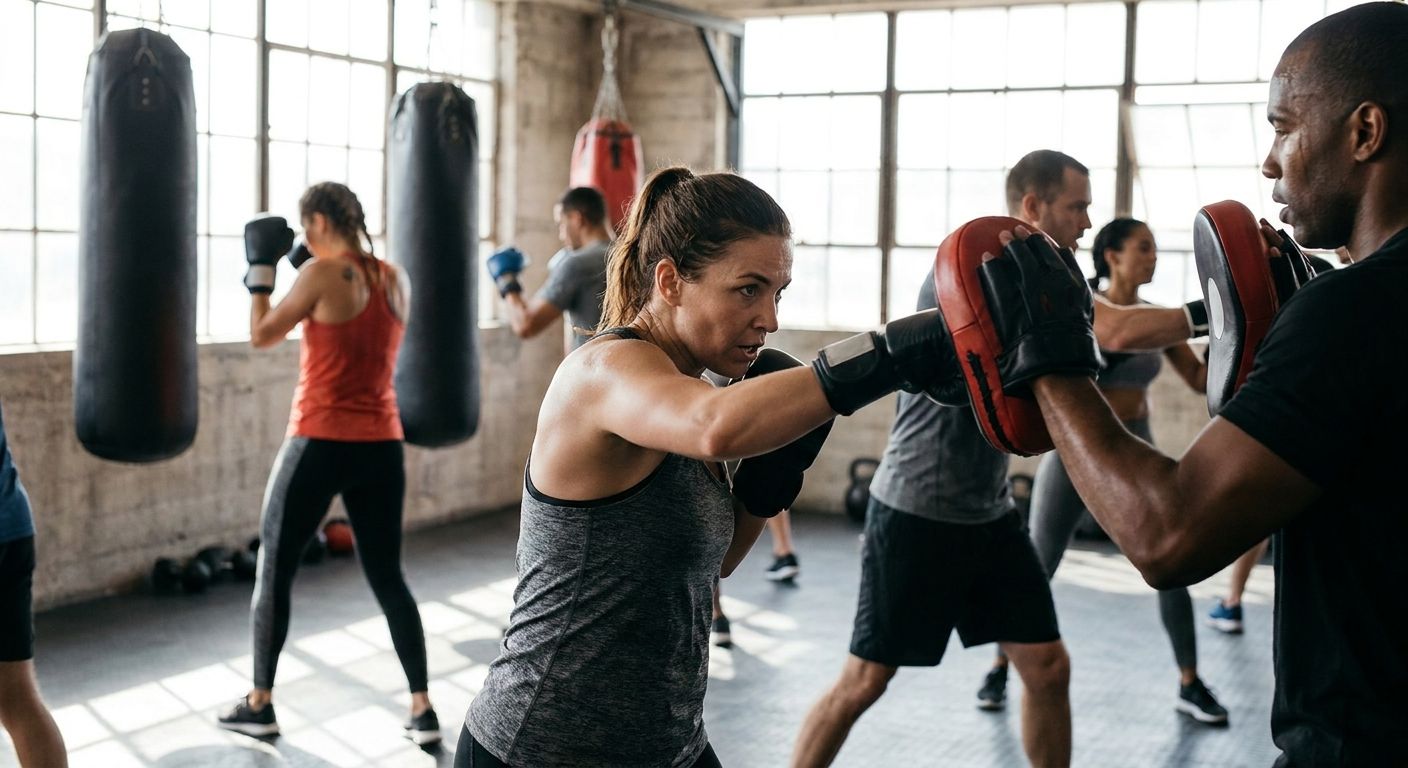
Sixteen-ounce hook-and-loop training gloves are the safest, easiest starting point for almost every new boxer, but the right pick still depends on hand size, whether you're hitting a bag or a partner, and how soon you plan to spar.
- The best boxing gloves for beginners in 2026 are 16oz hook-and-loop training gloves for safety and easy wrist support.
- 14oz gloves suit lighter-framed beginners doing bag and mitt work without extra bulk.
- 16oz lace-up gloves work for sparring prep only once a partner or coach is tying them on.
- Skip synthetic budget gloves for anything beyond occasional bag rounds; padding breaks down fast.
- Glove weight matters less than proper hand wraps for injury prevention in beginner boxing.
Why this matters
Most beginners buy gloves based on color or brand name and end up with the wrong weight for what they're actually doing. That mismatch is how wrists get strained in week two. Private boxing coaching exists partly to catch this before it happens — a coach checks glove fit and wrap technique before a single punch gets thrown.
Glove weight, closure type, and padding density change how your hands feel after round three, not just how the gloves look in a gym bag. Get any one of those wrong and you'll either bruise your knuckles on the bag or lose wrist stability during mitt work. In 2026, most beginner gloves fall into a handful of predictable categories — the trick is matching the category to your training, not chasing a brand.
What makes the best boxing gloves for beginners
- Correct weight class — 14-16oz for most adult beginners; 10-12oz for smaller hands or lighter body weight
- Wrist support — a wide hook-and-loop strap locks the wrist in place without help from a training partner
- Padding density — layered foam over the knuckles absorbs bag impact better than a single foam slab
- Thumb attachment — a fixed thumb (not floating) cuts the risk of thumb injury during mitt work
- Breathability — mesh palm panels matter once you're training more than twice a week
- Stitching durability — reinforced seams at the wrist and thumb are the first place cheap gloves fail
Beginner boxing gloves at a glance
| Type | Best for | Standout feature | Key limitation |
|---|---|---|---|
| 16oz hook-and-loop training gloves | Beginners starting from zero | Full wrist lockdown, no partner needed | Heavier feel during long mitt combos |
| 14oz hook-and-loop gloves | Lighter-framed beginners on the bag | Less bulk, faster hand speed | Less shock absorption for heavier hitters |
| 16oz lace-up gloves | Sparring prep with a coach present | Tightest, most stable wrist fit | Needs someone else to tie them |
| Synthetic leather budget gloves | Testing the sport before committing | Low upfront investment | Padding compresses fast under regular use |
| 10-12oz gloves | Smaller hands, teens, lighter boxers | Proportional fit, better control | Less padding volume for heavy bag work |
1. 16oz Hook-and-Loop Training Gloves: best boxing gloves for beginners starting from zero
These are the default recommendation for anyone walking into their first boxing session in 2026. The extra ounces spread bag impact across more foam, and the hook-and-loop strap means you can glove up alone before a solo bag session or a virtual lesson.
16oz hook-and-loop gloves pros:
- Highest impact absorption of any beginner weight class
- Strap closes and tightens without a training partner
- Forgiving for imperfect punching form while mechanics are still developing
16oz hook-and-loop gloves cons:
- Feel heavy during fast combination drills
- Bulkier fit can mask early technique flaws in hand positioning
16oz hook-and-loop gloves best for: total beginners with no prior boxing gloves. Verdict: Buy.
2. 14oz Hook-and-Loop Gloves: best boxing gloves for beginners doing bag and mitt work
Drop two ounces and you get a faster hand without giving up much protection, which is why a lot of lighter-framed beginners move here after the first month. It's a better match for mitt work, where speed and combination flow matter more than sheer cushioning.
14oz hook-and-loop gloves pros:
- Noticeably faster hand speed than 16oz
- Still uses a hook-and-loop strap for solo wear
- Comfortable for extended mitt combination rounds
14oz hook-and-loop gloves cons:
- Less cushioning for heavier hitters on a hard bag
- Not the right weight once sparring enters the picture
14oz hook-and-loop gloves best for: lighter-build beginners focused on bag and mitt training. Verdict: Buy.
3. 16oz Lace-Up Gloves: best boxing gloves for beginners heading toward sparring
Lace-ups give the tightest, most stable wrist fit of any glove type, which matters once actual contact enters the training. They're a poor fit for someone training alone, though — you need a coach or partner to tie them before every round.
16oz lace-up gloves pros:
- Most secure wrist fit for controlled sparring
- Standard weight for supervised contact drills
- Snug fit reduces glove shift mid-round
16oz lace-up gloves cons:
- Impossible to put on or take off alone
- Overkill for solo bag or mitt sessions
16oz lace-up gloves best for: beginners sparring under direct coach supervision. Verdict: Hold until a coach or training partner is part of the routine.
“If you need a training partner to put your gloves on, they're not beginner gloves yet.”
4. Synthetic Leather Budget Gloves: best boxing gloves for beginners testing the sport
These exist for one purpose: letting someone try boxing for a few weeks before spending more on gear. The foam compresses faster than higher-end padding, so they're a bridge, not a long-term setup.
Synthetic leather budget gloves pros:
- Lowest barrier to trying a first class
- Fine for occasional, light bag rounds
Synthetic leather budget gloves cons:
- Padding flattens noticeably after a few weeks of regular use
- Stitching at the thumb and wrist wears faster than reinforced gloves
- Not built for sparring or high-frequency training
Synthetic leather budget gloves best for: someone deciding whether boxing sticks before buying real gear. Verdict: Wait — fine short-term, replace once training becomes regular.
5. 10-12oz Gloves: best boxing gloves for beginners with smaller hands
Smaller hands and lighter body weights don't need the same glove volume as a 180-pound adult. A 10-12oz glove keeps proportion right and improves control on the mitts, which matters for teens and lighter-framed adult beginners alike.
10-12oz gloves pros:
- Proportional fit for smaller hands
- Better feel and control during mitt drills
- Less fatigue on the wrist and forearm over a long session
10-12oz gloves cons:
- Less total padding for heavy bag pounding
- Not appropriate for sparring against a full-weight adult
10-12oz gloves best for: teens, smaller-framed adults, and lighter beginners. Verdict: Buy if hand size and body weight fit the category.
How this list was ranked
Each category was scored against the six criteria above — weight class, wrist support, padding density, thumb attachment, breathability, and stitching durability — using the same standards coaches apply when fitting a first-time boxer for private boxing coaches for adult beginners. Nothing here ranks based on brand name; it ranks based on what protects hands and wrists during actual beginner training in 2026.
Which boxing gloves should you choose?
If you're not sure where to start, 16oz hook-and-loop training gloves are the right default in 2026 — they protect hands, don't require a partner to put on, and work for both bag and mitt sessions. Move to 14oz once hand speed becomes a priority, and only touch lace-ups once sparring is actually on the schedule with a coach present.
Gear only does part of the job. The rest is stance, footwork, and the conditioning drills that make those gloves worth wearing in the first place. Understanding what private boxing lessons cost before booking a coach helps set expectations for the full setup, gloves included.
Get glove fit checked by a coach
Live 1-on-1 sessions cover gear, stance, and mechanics from day one.
FAQ
What's the best boxing glove weight for beginners?
16oz is the standard beginner training weight in 2026 because it spreads bag impact across more padding. Lighter-framed beginners often move to 14oz once hand speed becomes a priority.
Are hook-and-loop or lace-up gloves better for a first-time boxer?
Hook-and-loop gloves are better for beginners training alone since they close without help. Lace-ups fit tighter but require a coach or partner to tie them before every round.
Can beginners spar in the same gloves used for bag work?
Not ideally — bag gloves and sparring gloves both commonly run 16oz, but a supervised sparring session calls for a lace-up fit that stays locked during contact. Bag-only hook-and-loop gloves can shift more under a moving opponent.
How do I know if boxing gloves fit correctly?
A correct fit leaves a small gap for a wrapped hand to make a full fist without the glove pinching. If your fingers can't fully close inside the glove, size up.
Do smaller hands need a different glove size?
Yes — 10-12oz gloves are proportioned for smaller hands and lighter body weights, common among teens and smaller-framed adult beginners. A full-size 16oz glove on a small hand reduces control on the mitts.
Is it safe to start boxing training without hand wraps?
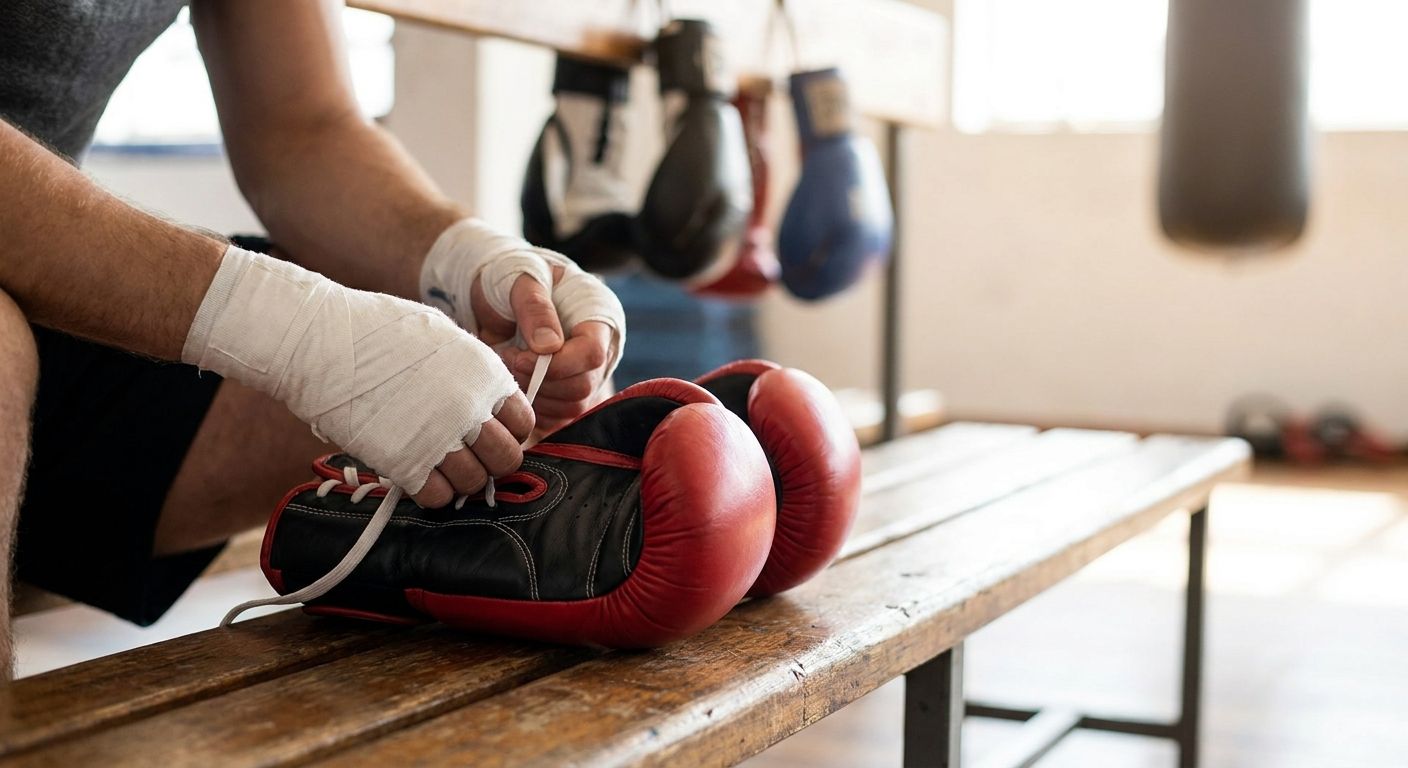
No — hand wraps stabilize the wrist and knuckles independently of glove weight, and skipping them is a common cause of beginner wrist strain. Wraps go on before gloves in every session, regardless of glove type.
What's the difference between training gloves and competition gloves?
Training gloves run heavier, typically 14-16oz, to protect hands through repeated bag and mitt rounds. Competition gloves are lighter, generally in the 8-10oz range depending on weight class rules, and aren't built for daily training volume.
One last thing
Glove weight gets all the attention, but hand wraps do more to prevent injury than any ounce upgrade. A beginner in properly wrapped hands and 14oz gloves is safer than someone in unwrapped 16oz gloves — wrap technique stabilizes the wrist joint in a way padding alone can't. If a coach skips checking your wraps before checking your gloves, that's a red flag, not the other way around.